
| تعداد دورهها | 16 |
| تعداد شمارهها | 42 |
| تعداد مقالات | 308 |
| تعداد نویسندگان | 427 |
| تعداد مشاهده مقاله | 789259 |
| تعداد دریافت فایل اصل مقاله | 155,345 |
| نسبت مشاهده بر مقاله | 2562.53 |
| نسبت دریافت فایل بر مقاله | 504.37 |
| تعداد مقالات ارسال شده | 351 |
| تعداد مقالات رد شده | 175 |
| درصد عدم پذیرش | 50 |
| تعداد مقالات پذیرفته شده | 90 |
| درصد پذیرش | 26 |
| زمان پذیرش (روز) | 137 |
| تعداد پایگاه های نمایه شده | 8 |
| تعداد داوران | 72 |
فصلنامه نگاه ایرانی امور خارجی Iranian Review of Foreign Affairs در سال 1390 با مجوز وزارت علوم تحقیقات و فناوری به زبان انگلیسی شروع به انتشار یافت. این نشریه با تمرکز بر موضوعاتی حول سیاست خارجی جمهوری اسلای ایران، در تلاش است نگاهی علمی و نوین به سیاست خارجی ایران در جهان داشته باشد و زمینه های شناسایی ابعاد آن را به دانش پژوهان جهان فراهم نماید.
رتبه فصلنامه علمی ایرفا در ارزیابی سال 1402 وزارت علوم، تحقیقات و فناوری (ب) بوده است
سیاست گذاری دسترسی به مقالات فصلنامه نگاه ایرانی به امور خارجی مبتنی بر دسترسی آزاد است 
نشریه علمی نگاه ایرانی به امور خارجی با احترام به قوانین اخلاق در نشریات، تابع قوانین کمیته اخلاق در انتشار (COPE) میباشد و از آییننامه اجرایی قانون پیشگیری و مقابله با تقلب در آثار علمی پیروی مینماید. 
نشریه علمی نگاه ایرانی به امور خارجی تحت مجوز بینالمللی https://creativecommons.org/licenses/by-nc/4.0/ فعالیت می کند. 
براساس مصوبه هیئت تحریریه و نظر مدیرمسئول، هزینه ای داوری در فصلنامه علمی نگاه ایرانی به امور خارجی، مطابق با آیین نامه نشریات وزارت علوم، مبلغ یک میلیون و پانصد هزار تومان می باشد که باید به شماره حساب :
2170348001006 بانک ملی (شبا IR93 0170 0000 0217 0348 0010 06)- به نام دبیرخانه مجمع تشخیص مصلحت نظام واریز گردد. فیش پرداختی باید به نام نویسنده مسئول مقاله باشد.
لطفا ساختار مقاله ارسالی بر اساس فرمت پیوست تنظیم شود. اینجا
راهنمای درج منابع بر اساس مصوبه وزارت علوم
قابل توجه نویسندگان محترم از تاریخ 1403/07/01 مقالات ارسالی در صورتی مورد بررسی قرار خواهند گرفت که؛
1- ساختار مقالات بر اساس مصوبه هیات تحریریه ایرفا تنظیم شده باشد.
2-مقالاتی که آدرس دهی (افیلیشن) نویسندگان و همکاران آن در دو زبان فارسی و انگلیسی به طور کامل و صحیح در سامانه نشریه وارد نشده باشد، وارد فرایند ارزیابی نخواهد شد. مشخصات نویسندگان پس از انتشار مقاله به هیچ عنوان قابل تغییر نخواهد بود
3- فایلهای پیوست تعهد نویسندگان تعارض منافع نویسندگان

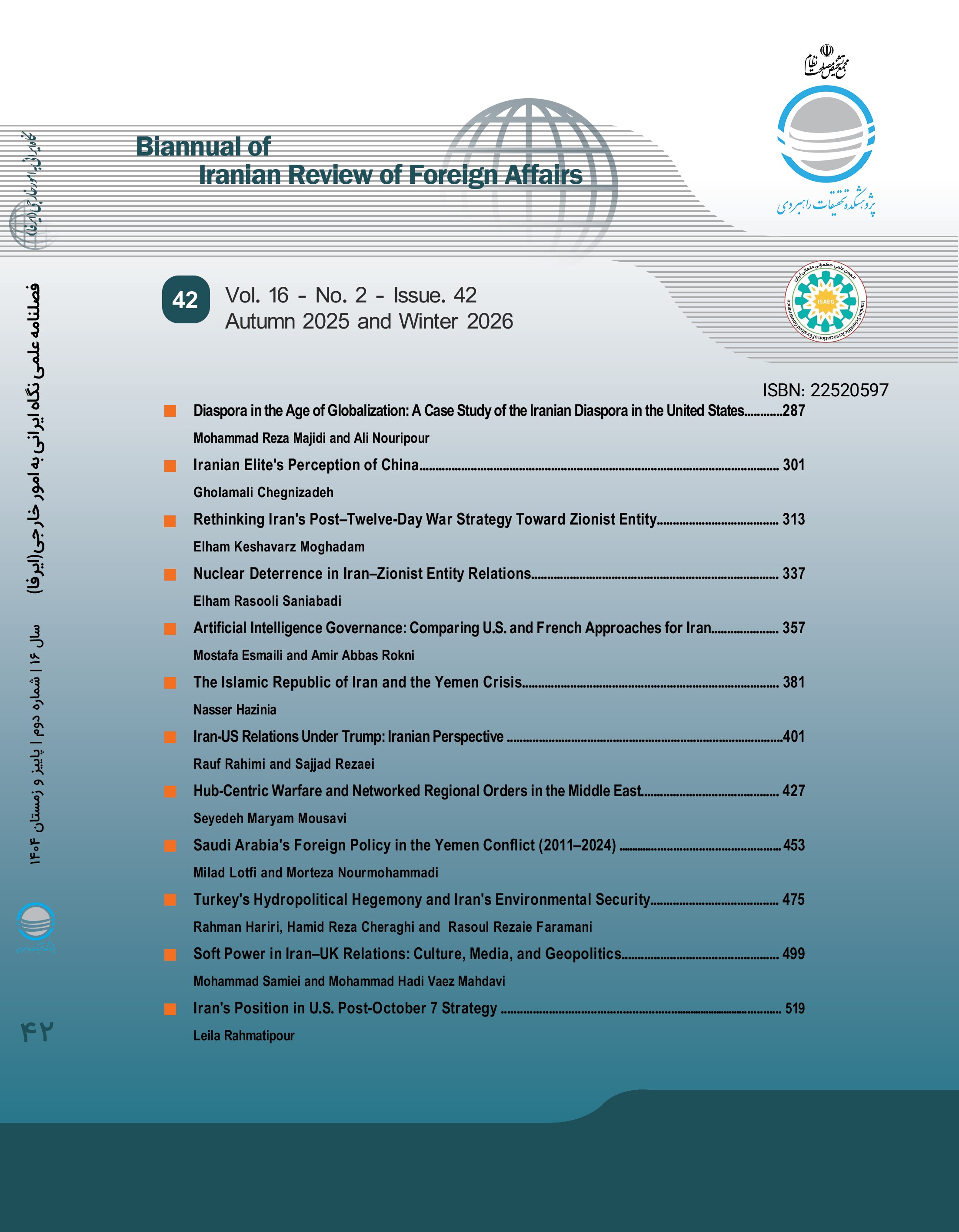
Pages 287-300
10.22034/irfa.2026.529416.1291
Mohammad Reza Majidi, Ali Nouripour
Pages 313-336
10.22034/irfa.2026.570511.1319
Elham Keshavarz moghadam
Pages 357-380
Mostafa Esmaili, Amir Abbas Rokni
Pages 381-400
10.22034/irfa.2026.569290.1317
Nasser Hazinia
Pages 401-426
10.22034/irfa.2026.572934.1320
Rauf Rahimi, Sajjad Rezaei
Pages 427-452
10.22034/irfa.2026.580395.1324
Seyedeh Maryam Mousavi
Pages 453-474
10.22034/irfa.2025.565245.1313
Milad Lotfi, Morteza Nourmohammadi
Pages 475-498
10.22034/irfa.2026.549987.1316
Rahman Hariri, Hamidreza Cheraghi, Rasoul Rezaie Faramani
Pages 499-518
10.22034/irfa.2026.569620.1318
Mohammad Samiei, Mohammad Hadi Vaez Mahdavi
Pages 519-534
10.22034/irfa.2026.585242.1330
Leila Rahmatipour


